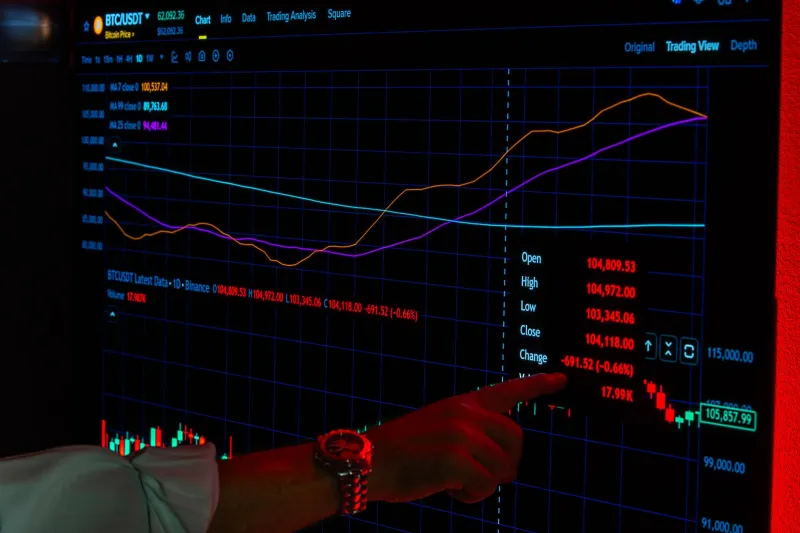
Borrowed Confidence: How Leverage Betting on Decentralized Platforms Turns a Hot Streak Into a Zero Balance
There's a particular kind of confidence that settles in after a few good calls. You nailed the spread on three straight games. Your prediction market positions closed green. You're starting to feel like you've cracked something. That's exactly when decentralized platforms with built-in leverage features show up in your feed, whispering about 5x returns.
And that's exactly when things tend to go sideways fast.
Leverage and margin betting aren't new concepts — Wall Street traders and forex junkies have been using borrowed capital to amplify positions for decades. But when those mechanics get baked into decentralized protocols and paired with the natural volatility of crypto markets, the result is a risk profile that most retail bettors genuinely aren't prepared for. The on-chain record doesn't lie: liquidation events on decentralized leveraged betting platforms are frequent, brutal, and often completely avoidable — if you understand what you're actually signing up for.
What Leverage Actually Means on a Decentralized Platform
At its core, leverage lets you control a larger position than your actual deposit would normally allow. Put up $500 in collateral, open a 10x leveraged bet, and you're effectively wagering $5,000 on the outcome. Win, and your gains are calculated on the full $5,000. Lose — or watch your collateral value drop — and the protocol starts doing math that doesn't favor you.
On a centralized sportsbook or exchange, a margin call usually means a human-readable warning, maybe a grace period, possibly a phone call from a rep asking if you want to add funds. The process has friction built in.
Decentralized platforms don't work that way. Smart contracts execute automatically when predefined thresholds are crossed. There's no customer service rep, no grace period, no negotiation. When your collateral value dips below the liquidation threshold — sometimes just a few percentage points of movement in volatile markets — the protocol closes your position and distributes the remaining collateral. In many cases, liquidator bots are sitting in the mempool specifically waiting to trigger these events the moment conditions are met. You might not even see it happen before it's done.
The Collateral Trap Nobody Explains
Here's where decentralized leverage gets especially tricky for crypto bettors: your collateral is almost always a crypto asset, not a stablecoin. That means you're not just exposed to the outcome of your bet — you're exposed to the price movement of whatever token you posted as collateral.
Say you lock up ETH to open a leveraged position on a prediction market. The market moves slightly against you, but nothing catastrophic. Normally you'd ride it out. Except ETH drops 12% in the same window because of broader market turbulence. Now your collateral value has fallen, your margin ratio has deteriorated, and the liquidation engine doesn't care that the underlying bet might still recover. It sees a number below a threshold and it acts.
This double exposure — bet outcome and collateral volatility — is the hidden variable that catches retail bettors off guard. You can be right about the thing you bet on and still get liquidated because the asset you used to fund the position moved against you.
What the On-Chain Data Actually Shows
Public blockchain data makes liquidation patterns surprisingly readable if you know where to look. During periods of elevated market volatility — think major Fed announcements, crypto market corrections, or unexpected geopolitical events — liquidation volumes on decentralized leveraged platforms spike dramatically. We're not talking about a handful of unlucky traders. During sharp ETH or BTC drawdowns in recent years, some protocols have processed hundreds of millions of dollars in forced liquidations within a matter of hours.
The accounts getting hit hardest aren't always inexperienced users either. Wallet histories show that many liquidated positions belonged to addresses with significant prior activity — people who had been using these platforms successfully for months. A winning streak builds conviction, conviction leads to larger positions, larger positions mean higher leverage, and higher leverage means a narrower margin for error when conditions shift.
The pattern is consistent enough that it almost reads as mechanical: success breeds overconfidence, overconfidence breeds leverage, leverage breeds liquidation.
Why This Hits Different Than Losing a Straight Bet
Losing a regular bet stings, but it's bounded. You put in $200, you lose $200, you move on. Leverage changes that psychological math in ways that are genuinely dangerous for how most people think about risk.
When you're leveraged, a position that looks manageable on paper can collapse faster than you can react — especially in crypto markets that trade 24/7 and don't pause for weekends or holidays. A Sunday night liquidity crunch, a 3 a.m. market flash crash, an oracle price feed update that doesn't move in your favor — any of these can trigger liquidation while you're asleep.
And unlike a bad beat on a sports bet, a leveraged liquidation often leaves bettors questioning their entire framework. The cognitive dissonance of being right about a prediction but still losing money because of collateral mechanics is genuinely disorienting. It's the kind of loss that pushes people toward chasing — doubling down with whatever's left, opening new leveraged positions to try to recover, and accelerating the exact cycle that caused the problem in the first place.
Decentralized Doesn't Mean Forgiving
One of the core appeals of decentralized platforms is the removal of intermediaries. No platform can freeze your account, no operator can reverse a trade, no middleman is skimming your winnings. That's a real advantage in a lot of contexts. But that same trustless, automated structure means there's nobody to call when a liquidation feels wrong, when an oracle misfired, or when market conditions were genuinely anomalous.
Some protocols have introduced safety mechanisms — partial liquidations, buffer zones, insurance funds — but implementation quality varies wildly. An unaudited platform's liquidation engine may not behave the way the documentation suggests under real stress conditions. And by the time you find out, the transaction is already confirmed on-chain.
Before You Touch a Leverage Feature
If you're going to engage with leveraged betting on decentralized platforms — and plenty of experienced traders do, successfully — there are a few things worth internalizing before you open your first margin position.
Understand your liquidation price before you enter the trade, not after. Most platforms display this, but bettors frequently ignore it. Know exactly how far your collateral can drop before the protocol acts.
Use stablecoins as collateral where the platform allows it. Eliminating collateral volatility removes one of the two major variables working against you.
Size down significantly from what you'd risk on a straight bet. A 5x leveraged position using 20% of your usual stake is still meaningful exposure with substantially less liquidation risk than going full size.
And honestly? Treat leverage like a tool you haven't been trained on yet. Watch how it behaves in small amounts before you let it anywhere near a real bankroll.
The chain records everything. Winning streaks, liquidation events, wallet balances zeroed out in a single block. Decentralized platforms give you transparency — but they also give you enough rope to do serious damage if you're not paying attention to the mechanics underneath the interface.